 |
| The Council of Trent (From: Wikipedia) |
Showing posts with label Europe. Show all posts
Showing posts with label Europe. Show all posts
Sunday, January 10, 2016
Say "Justification by Faith", or I Pull Your Beard!

Sunday, October 12, 2014
Pigs in the Church
 |
| Coat of arms for the Corbin family, of which I am a descendant. (From: byandbylord.blogspot.com) |
Newcomers to noble status, whether they had bought their fiefs in 1500 or in 1600, knew how to keep up appearances. They dressed the part. They built elaborate country houses. They maintained large numbers of retainers. They were presented at court. Their claims might arouse the suspicion of a handful of noblemen of older vintage, the king himself might laugh, privately, at their pretensions, but in public, as they made their way in silk-lined coaches toward masked balls and other expensive entertainments, who could deny their eminence?
Were they not received at court? Were they not lords among their peasants? Were they not set apart from commoners by their expensive wigs, their fashionable clothes, their perfumed gloves, the jeweled swords which hung from their belts? Participants in a ballet of deference, the noblemen and would-be noblemen of the seventeenth and eighteenth centuries were constantly removing and replacing their wide-brimmed hats, acknowledging the superior rank of a duke or president, receiving the homage of their own presumed inferiors. Bowing and scraping, insisting on their prerogative to remain seated or to keep their hats on, attended by servants and pushing their way into the place they felt entitled to on public occasions, hordes of men and women insisted on their various and conflicting positions in the world of privilege. They came to blows, at church, over the right to be seated in the front benches. 'They are like pigs,' wrote a country priest. 'Like pigs, they tear each other up. They have nothing but contempt for each other, they think that they can add weight to their own reputation by accusing others of being of more recent nobility.' Since privilege was largely a matter of wealth and of appearances [not birth], it is not surprising that appearances mattered so much. Kings set the tone, establishing elaborate hierarchies at court. At the royal palace in Versailles, thousands of courtiers lived in fear of committing breaches of etiquette, clinging to bewildering distinctions of rank. It was bad manners to knock at a door in Versailles. The proper way was to scratch at the door with the little finger of the left hand. If the servant of a social superior brought you a message, you had to receive him standing and bareheaded. If you encountered the royal dinner on its way from the kitchens to the table, you were obliged 'to bow as to the King himself, sweeping the ground with your hat and saying, in a low, reverent, but distinct voice: 'The King's dinner.' Who could sit down, in the presence of whom, and on what, was a vexing problem at court. Two prominent people could not meet without verifying the seating arrangements in advance. A fifteen-year-old duchess, elevated by her recent marriage to a rank which made her superior to her own mother, has a screaming fit when the usher on duty throws open both leaves of the door as her mother enters the room. As her social inferior, the mother was entitled only to one half of the door being opened for her." (63) --George Huppert, After the Black Death: A Social History of Early Modern Europe
I am descended from the Corbin family, which has its own coat of arms, pictured above. Therefore, I hereby assert my full privileges. I am declaring myself tax-exempt and demand that you not read this blog while you are sitting on the toilet or riding the bus. Such action would not be respectful to my rank.
Saturday, September 6, 2014
Pass Some of that Spicy Sauce, Please!
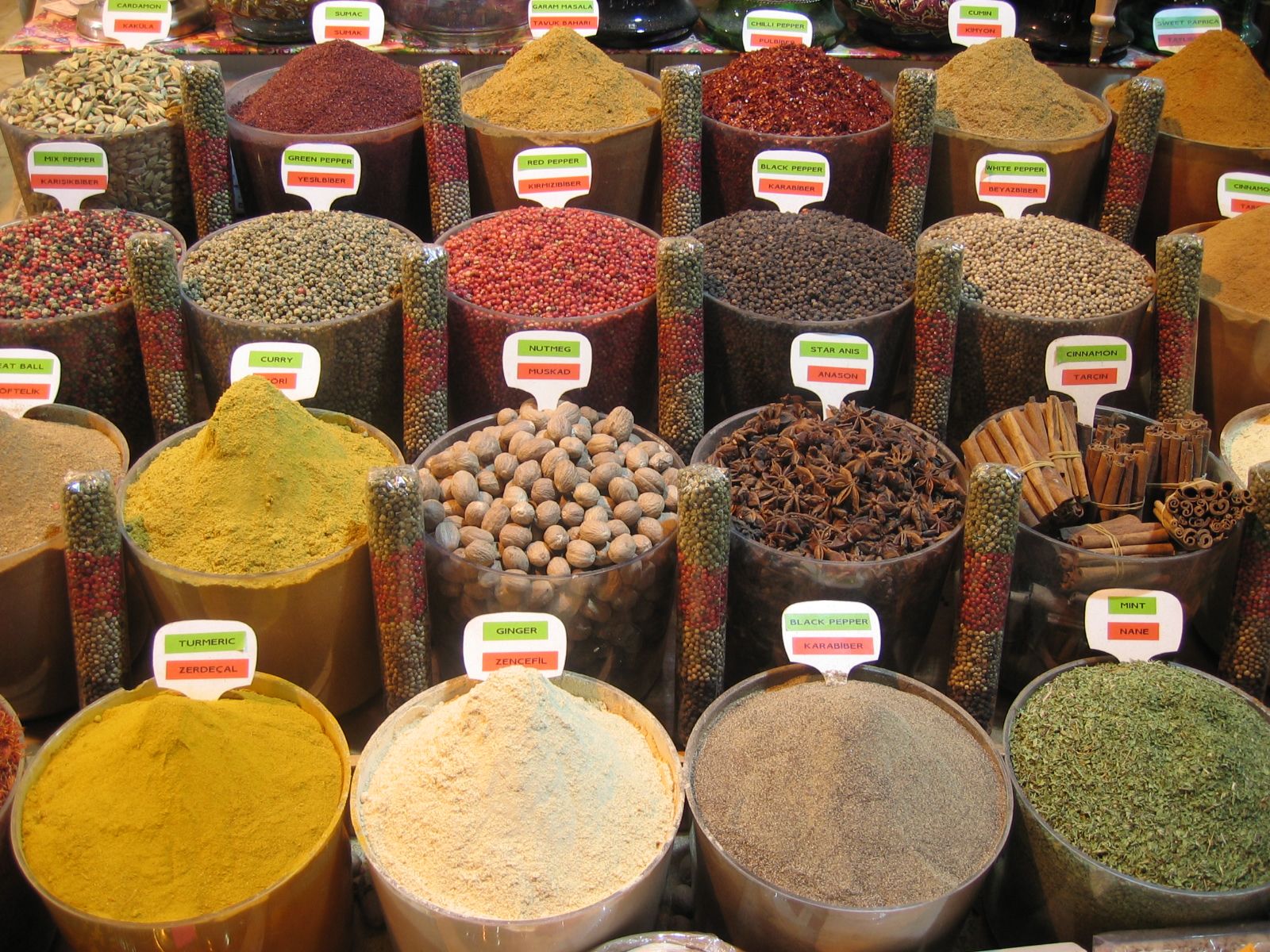 |
| A spice market in Istanbul. (From: Wikipedia) |
I might also add that medieval Europeans had no tomatoes. Tomatoes are native only to South America. So, for hundreds and hundreds of years before the 16th century, Italian cooks had no tomatoes!
Wednesday, May 29, 2013
Peasants and Potatoes
"More efficient methods of land use [in 19th century Europe] were accompanied by the rapid development of improved strains of wheat and other traditional crops... Far and away the most important of the new crops, however, was the potato (also originally imported from America), which could be grown on poor soil, was comparatively insensitive to the vicissitudes of weather, and yielded from two to four times as much food as grain crops. Although cultivated throughout Europe, the potato became the staple diet of poorer peasants in the northern and central regions along a broad front from Ireland to Russia, a dependence which was to prove a disaster when the potato crop failed." (2) --Norman Rich, The Age of Nationalism and Reform, 1850-1890
Having had plenty of exposure to Polish cuisine and its heavy reliance on potatoes, I am curious to discover what Polish and other peasants of northern Europe ate before the arrival of the potato around 1600!
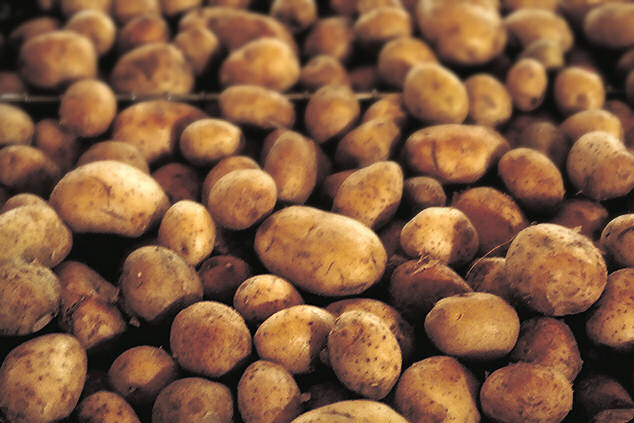 |
| Potatoes originally came from South America. They were brought by Spanish explorers to Spain in the mid-16th century. From there, the crop gradually spread throughout Europe. |
Having had plenty of exposure to Polish cuisine and its heavy reliance on potatoes, I am curious to discover what Polish and other peasants of northern Europe ate before the arrival of the potato around 1600!
Subscribe to:
Posts (Atom)