Showing posts with label 19th Century. Show all posts

Saturday, July 18, 2015

Railroad Pie

In the mid-19th century, most trains would stop for 20-30 minutes at mealtimes in whatever city or town they happened to be passing through. In the cities, competition between multiple eating establishments seems to have raised the quality of the food. However, the majority of these meal stops were made in places where hungry passengers had few options to choose from and a short time to do it. With no competition, one can only imagine the poor quality of food offered to captive passengers. Food historian James D. Porterfield describes the offered repasts:
James D. Porterfield, Dining by Rail:
The History and Recipes of America's
Golden Age of Railroad Cuisine

"These early eating stops were nearly always described as terrible. The bitter black coffee may have been brewed only once a week. The ham could be dry, salty, and tough. Hard-cooked eggs were stored for an indeterminate period of time in limed water to keep them from discoloring. Fried eggs may have been cooked in rancid grease and certainly were served on stale bread. Here also one found leaden biscuits--their nickname, 'sinkers', giving a clue as to their quality--and something which earned the euphemism 'railroad pie'. The recipe was thought to be to take two crusts of cardboard and fill them with thickened glue." (58) --John P. Hankey, "Riding on the Rail,"  Rails Across America: A History of Railroads in North America, quoting James D. Porterfield's Dining by Rail: The History and the Recipes of America's Golden Age of Railroad Cuisine

Friday, July 17, 2015

Traveling at "the heady speed of 18mph"

In 1830, Peter Cooper, a New York businessman, invested in an experimental steam locomotive, the Tom Thumb, to prove that steam power was a viable option for moving passengers and goods by rail. Investors in the Baltimore & Ohio Railroad believed that the sharp curves on their tracks precluded the use of a steam locomotive.
A 1927 replica of the locomotive "Tom Thumb."
(From: Wikipedia)

"Cooper set out to prove them wrong. His engine, assembled by a team of Baltimore mechanics, weighed about one ton, and was not much larger than a railroad handcar. The locomotive boasted a vertical, multi-tubular boiler, a single cylinder, drive gears, and rode on the 'friction wheels' designed by Ross Winans, who compared the engine's power favorably to the Rocket [a British steam locomotive predating the Tom Thumb]. With Cooper at the controls, the engine managed to achieve the heady speed of 18 mph; some of the passengers pulled out notebooks and wrote down their thoughts to prove that human beings could function normally at such high velocities." (10) --James D. Dilts, "The Early Days," Rails Across America: A History of Railroads in North America, William L. Withuhn, ed.

Sunday, July 5, 2015

Johnny Appleseed(s) of Pot

"By [the mid-1970s], the American backwoods were filling with self-styled Johnny Appleseeds sowing cannabis seeds far and wide as they dreamed of a new Utopia of the Stoned. (The phrase 'Johnny Appleseed of Pot' recently produced nearly ten thousand hits on Google.)" (268) --Howard Means, Johnny Appleseed: The Man, The Myth, The American Story

Johnny Appleseed (From: Wikipedia)
Means published this book in 2011, so his Google search is somewhat outdated. I searched for the phrase "Johnny Appleseed of Pot" and received just 214 results--all highly entertaining by the way. If you search without the phrase quotes, then you get 129,000 results; but this is misleading because there are a number of websites that talk about the pot, as in a metal pan, that Johnny Appleseed wore on his head--in other words, nothing to do with the other kind of "pot."

I don't know about the 1970s, but as recently as 2005, there was a "Johnny Appleseed of Pot" in Benzie County, Michigan. This specialty nurseryman would search for ideal places to plant marijuana, no matter who the landowner was, sow his seeds, then check back later to tend them. Exactly the pattern used by the real Johnny Appleseed!

Monday, February 16, 2015

I Am Lovesick, Now Please Pass the Opium

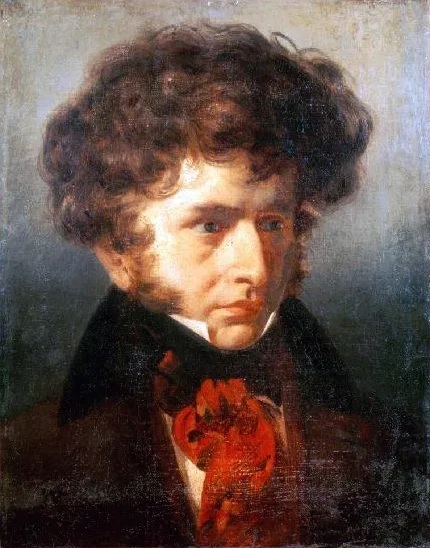
Hector Berlioz (From: Wikipedia)
"When he was twenty-three, [Hector] Berlioz was overwhelmed by the works of Shakespeare and also fell madly in love with a Shakespearean actress, Harriet Smithson, to whom he wrote such wild, impassioned letters that she considered him a lunatic and refused to see him. To depict his 'endless and unquenchable passion,' Berlioz wrote the Symphonie fantastique (Fantastic Symphony) in 1830, which startled Parisians by its sensationally autobiographical program, its amazingly novel orchestration, and its vivid depiction of the weird and diabolical.

In 1830, too, Berlioz won the Prix de Rome (the Rome Prize), subsidizing two years' study in Rome; when he returned to Paris, he finally met and married Harriet Smithson--after she had attended a performance of the Fantastic Symphony and realized that it depicted her. (They separated, however, after only a few years.)" (241-242)

So, what exactly was in the Fantastic Symphony that won Berlioz the girl of his dreams? Here are some quotes from the program notes he wrote for his audience:

"A young musician of extraordinary sensibility and abundant imagination, in the depths of despair because of hopeless love, has poisoned himself with opium. The drug is too feeble to kill him but plunges him into a heavy sleep accompanied by weird visions. His sensations, emotions, and memories, as they pass through his affected mind, are transformed into musical images and ideas. The beloved one herself becomes to him a melody, a recurrent theme (idee fixee) which haunts him continually...

Harriet Smithson (From: Wikimedia)
[Notes for the Fourth Movement, March to the Scaffold] He dreams that he has murdered his beloved, that he was been condemned to death and is being led to the scaffold. The procession moves forward to the sounds of a march that is now somber and fierce, now brilliant and solemn, in which the muffled sounds of heavy steps give way without transition to the noisiest outbursts. At the end the idee fixee returns for a moment, like a last thought of love interrupted by the death blow...

[Notes for the Fifth Movement, Dream of a Witches' Sabbath] He sees himself at a witches' sabbath in the midst of a hideous crowd of ghouls, sorcerers, and monsters of every description, united for his funeral. Strange noises, groans, shrieks of laughter, distant cries, which other cries seems to answer. The melody of the loved one is heard, but it has lost its character of nobleness and timidity; it is no more than a dance tune, ignoble, trivial, and grotesque. It is she who comes to the sabbath!... A howl of joy greets her arrival... She participates in the diabolical orgy... The funeral knell, burlesque of the Dies irae. Witches' dance. The dance and the Dies irae combined." (243-246) --Roger Kamien, Music: An Appreciation

I hope all you lovesick young men are out there reading! If you really want the girl, write in a song in which you imagine murdering her and, after your trial and execution, discovering that she is a witch! Now that's a prescription for love. Hey, it worked for Berlioz.


Saturday, August 16, 2014

St. Nicholas Hails from Tug Hill

Clement Clark Moore (From: Wikipedia)
Clement Clarke Moore wrote "Twas the Night Before Christmas" in 1822. This was the first popular culture item to conceive of St. Nicholas in the contemporary manner of a big man in a red suit with a sleigh pulled by a reindeer and gifts for all the good little boys and girls. The cartoonist Thomas Nast was inspired by Moore's poem to draw St. Nicholas. His were the first pictures of the new Santa Claus. These are all well-known facts of 19th century Christmas history. What is not precisely known is where Moore was when he wrote the poem. This is of crucial significance because proponents of one or the other location adduce a number of inspirations for the poem based on where they believe Moore wrote it. There are two possible locations: 1) Constableville, New York, or 2) Greenwich Village, New York City.

"Involved in the debate is Constable Hall, a stately limestone mansion in the rugged Tug Hill Country of northern New York state, far from Moore's New York City home. One 'Historic Museum Guide' for New York states with full conviction: 'It was at Constable Hall in 1822 that Clement Clark Moore, a first cousin of William Constable, Jr.'s widow, wrote "A Visit from St. Nicholas," which is popularly known today as "Twas the Night Before Christmas.' 

Constable Hall, Constableville, New York
(From: Constable Hall Museum)
"A second opinion relating to the Constables has subsisted through the years. Some believe that although Moore was not present in the Hall at the time of its writing, the poem was intended as a gift for the Constable children whose father had earlier died to an accident during the building of the elegant home...

"And from where did Clement Moore draw inspiration for the poem? Again, opinions seem to vary with the source.

"Constable Hall was built in Lewis County by William Constable Jr. on a vast expanse of land inherited from his father. Constable's wife, Mary Eliza McVicker Constable, was a first cousin of Clement Moore and his visits there are documented. 

"A 1998 Palm Beach Post newspaper story contends that on one such visit Moore encountered a Dutch gardener named Pieter, 'plump and jolly' and perhaps the inspiration for Santa Claus according to one of the last generation of Constables to live in the Hall. The account implies that physical features of the Hall, such as a large chimney and interior shutters in each room, are suggested in the poem." (338-339) --James Hughes, "Those Who Passed Through: Unlikely Visits to Unlikely Places," New York History, Vol. 91, No. 4 (Fall 2010)

Thomas Nast's 1881 Drawing of St. Nicholas
(From: St. Nicholas Center)
Wait a second... the Palm Beach Post?? Hughes rests content with the Palm Beach Post as a source?! I found Hughes' article fascinating because (sad to say) I have never heard of this story of Moore and Tug Hill before. I was glad to read the article. But I am disappointed to see a writer published in New York History citing a contemporary newspaper as his final source of information on a historical matter. I think we could all agree that a published article in a history journal should dig deeper than a current newspaper source.

Nevertheless, what a great story! I cannot wait to visit Constable Hall the next time I go back to northern New York!  

(By the way, Hughes goes into equal depth in the article on the possibility of Greenwich Village as the location for Moore's creativity. But, despite my love for New York City, I'm giving the limelight to Tug Hill because limelight does not shine on Tug Hill very often.)

Monday, August 11, 2014

Football and Bull Fights

"It has been said, not inaptly, that the relation of football to physical culture is much the same as that of the bull-fight to agriculture." (160) --Thorstein Veblen, The Theory of the Leisure Class (1994 Dover edition)

Veblen was not much of a football fan, was he? He wrote this in 1899. If you haven't read any Victorian texts recently, "physical culture" was the term then used for exercise and maintaining good physical fitness. Veblen's larger point is that football accentuates archaic human traits of predation and barbarism that are little economic use to a society. His ideas were part of the popular late 19th century ideology of social evolution. (You are probably more familiar with Herbert Spencer as social evolution's main advocate.) Veblen thought the evolution of the human species is driven by the natural selection of traits that enable humanity to progressively produce more wealth. For Veblen, it all comes down to whether certain human traits are useful in an economic sense. Apparently, football does not make the cut!

The Theory of the Leisure Class is a classic of economics and sociology. I would recommend it for its unique descriptions and explanations of Victorian upper class society--which, by the way, can be largely adapted to Americans of all classes today. His observations of the upper class's "conspicuous consumption" help one to understand why contemporary Americans (and probably all of Western society) are obsessed with consuming goods--cars, clothing, houses, etc--in order to remain "respectable" to their neighbors. However, Veblen's book is awfully convoluted. The organization of his arguments within chapters is sometimes hard to distinguish. I think he could have written this book using half the number of pages--and been better off for it.    

Sunday, July 27, 2014

A "Rain of Blood"

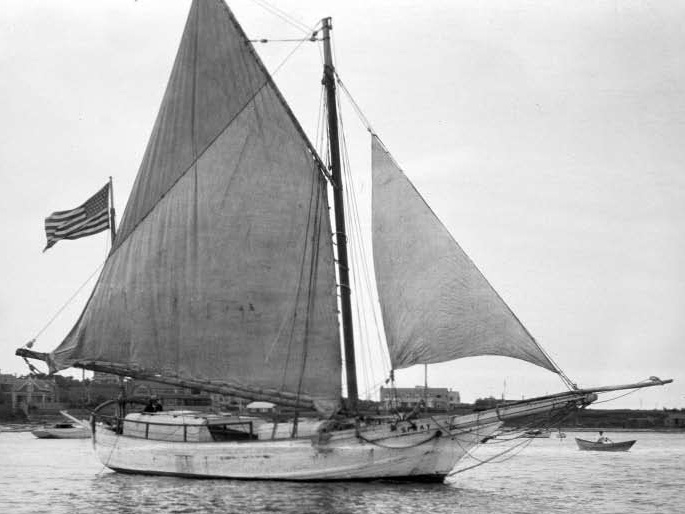
Captain Joshua Slocum was the first person to circumnavigate the globe in a sailboat. Spray. In 1900, he published a best-selling book about the trip, Sailing Alone Around the World. The book has become a classic of nonfiction sea adventure prose. In the passage below, Slocum describes a strange natural phenomenon that occurred during his stay in Melbourne, Australia.
The Spray (From: Wikipedia)
It took him three years, 1895-1898, to accomplish this feat. He sailed a 37-foot yawl that he built himself while in New Bedford, Massachusetts. He called it the

"I should mention that while I was at Melbourne there occurred one of those extraordinary storms sometimes called 'rain of blood,' the first of the kind in many years about Australia. The 'blood' came from a fine brick-dust matter afloat in the air from the deserts. A rain-storm setting in brought down this dust simply as mud; it fell in such quantities that a bucketful was collected from the sloop's [Spray] awnings, which were spread at the time. When the wind blew hard and I was obliged to furl awnings, her sails, unprotected on the booms, got mud-stained from clue to earing.
"Red dust storm at Belmore Bridge, Maitland, New South Wales, Australia"
(From: Wikimedia Commons)


The phenomena of dust-storms, well understood by scientists, are not uncommon on the coast of Africa. Reaching some distance out over the sea, they frequently cover the track of ships, as in the case of the one through which the Spray passed in the earlier part of her voyage. Sailors no longer regard them with superstitious fear, but our credulous brothers on the land cry out 'Rain of blood!' at the first splash of the awful mud." (p. 177, Dover Edition, 1956) --Joshua Slocum, Sailing Alone Around the World


Sunday, April 27, 2014

A Coup D'Etat or a Night With Your Mistress?

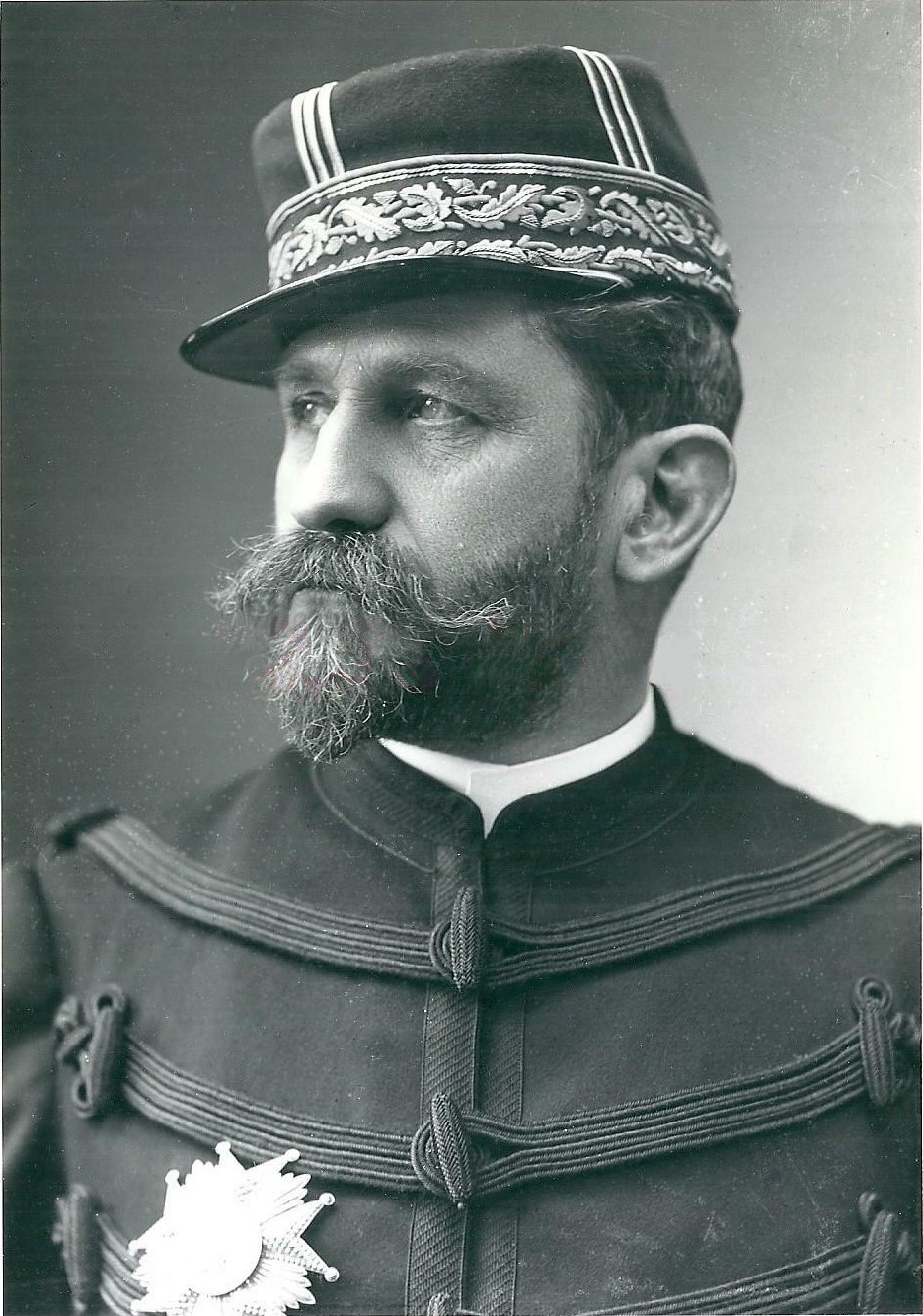
General Georges Boulanger
(From Wikipedia)
"The real basis of [General George Boulanger's] appeal... and the quality that united so many diverse segments of French society in his support, was his embodiment of French hopes for a successful war of revenge against Germany. Here, at last, was the strong man the nation had been seeking, the French answer to [powerful German statesman Otto von] Bismarck. As if to confirm French patriots in their opinion, Bismarck in a speech of January, 1887, named Boulanger as the greatest obstacle to good relations between France and Germany...

In March, 1888, they committed the blunder of dismissing [Boulanger] from the army for engaging illegally in politics while in military service. As a result, Boulanger was no longer a soldier under government orders, and was free to stand for election to the Chamber of Deputies. In the following weeks he entered one by-election after another, as the French electoral system made it possible for him to do, and in each case he was triumphantly elected. The crucial test of Boulanger's popularity came on January 27, 1889, when he stood as a candidate in radical, skeptical Paris. The government threw all its resources in the campaign to defeat him, but again he won a tremendous victory. It was now generally expected that he would seize the opportunity offered by this popular mandate to overthrow the government. Plans for a coup d'etat were made by his supporters; the commanders of the key regiments in Paris waited for his orders. But instead of leading his troops against the government, he spent the night of January 27 with his mistress. Afterward, alarmed by the news of the government's intention to arrest him for treason, he fled abroad." (196-197)  --Norman Rich, The Age of Nationalism and Reform, 1850-1890


Monday, November 18, 2013

Humans Evolving Into Dog-Fleas

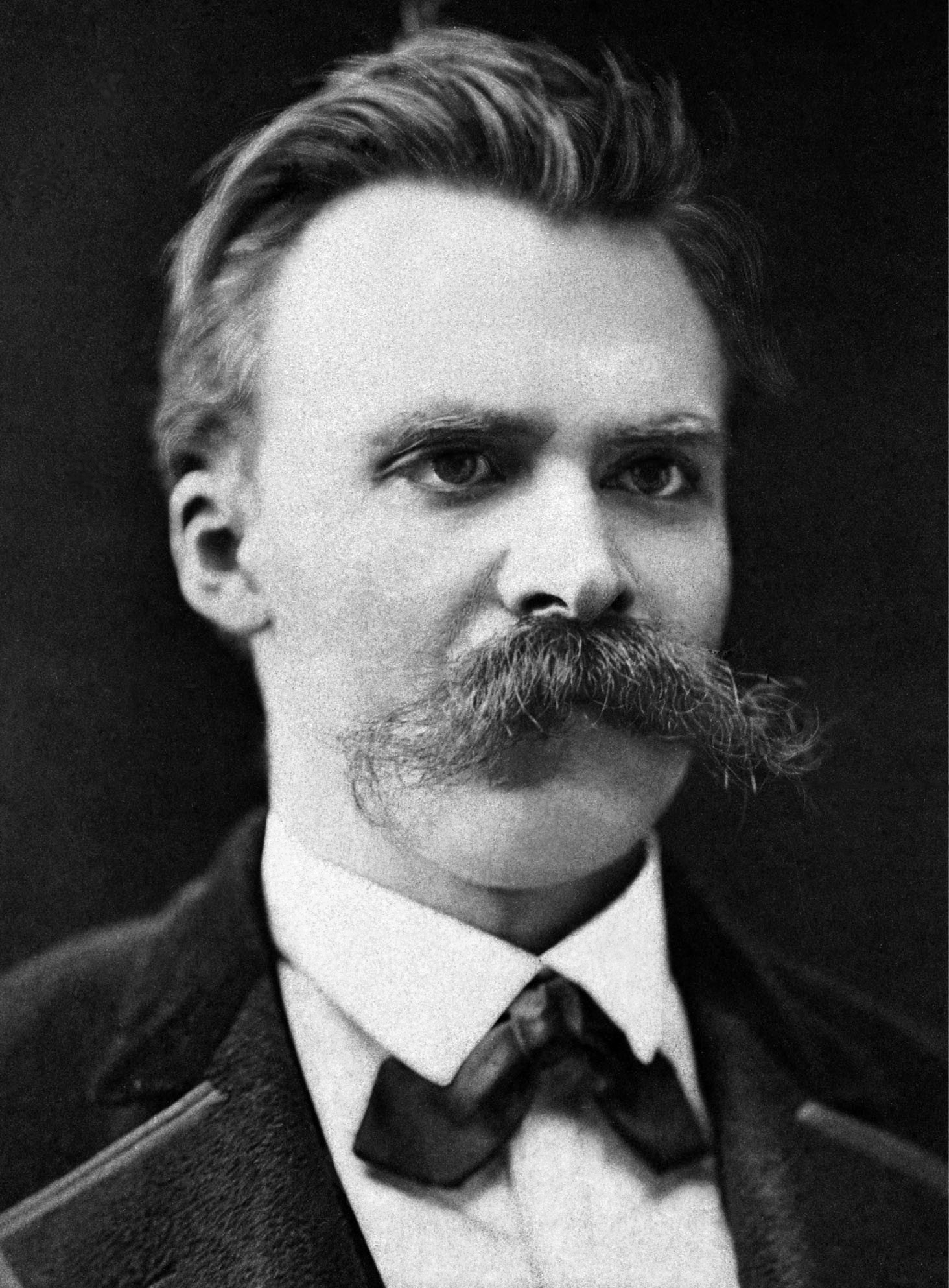
Friedrich Nietzsche (From: Wikipedia)
"...[Friedrich] Nietzsche teasingly introduced a character called 'the last man,' a frightening (or flattering, depending on your point of view) possibility for the 'end' of evolution. The last man is the ultimate bourgeois, the satisfied utilitarian, the absolute couch potato. 'We have found happiness,' says the last man, and blinks in dull contentment. This, Neitzsche warns, is also one of our possibilities. We can continue to consume our comforts, minimize dangers, ignore the mysterious and unknown, and discourage creativity, until the world is so safe for us that we will become 'ineradicable, like the dog-flea.' Or, we might strive to become something more than 'human-all-too-human' and aspire to the Ubermensch [superman]." (232) --Robert C. Solomon and Kathleen M. Higgins, A Short History of Philosophy

I would add to the description of the "last man" an obsession with trivial entertainment--whether by television shows, best-selling novels, or sports. I might also add a "last child" for whom being entertained during school lessons is an absolute necessity without which learning simply cannot take place. Entertainment, not knowledge, is the chief priority. To the "last child", I'd also add of course the "last principal" and the "last school" to my description of human evolution gone bad.

On lighter note, if being a Ubermensch means having a mustache like the one above, then sign me up!

Sunday, November 17, 2013

The Definition of "Charlatan"

Arthur Schopenhauer (From: Wikipedia)
"[Arthur] Schopenhauer is best known for his pessimism and his curmudgeonly style. His antipathy toward Hegel was so profound that he insisted on teaching courses in the same university at the same times that Hegel gave his lectures. Given Hegel's popularity, Schopenhauer's courses were little attended, and his teaching career came to a quick end. Fortunately, he was independently wealthy and thus able to devote himself to writing books in which he frequently alluded to 'charlatanism,' which, as he clearly explained in footnotes, meant Hegel." (223-224) --Robert C. Solomon and Kathleen M. Higgins, A Short History of Philosophy

Friday, July 5, 2013

Spitting at the Russian Occupation of Poland

Maria Sklodowska, 16 years old.
From: Wikimedia
"Nowhere in Warsaw was the Russian military presence more palpable than in Saxon Square. The Saxon Palace, once a royal residence, was now a Russian military headquarters; low-lying buildings surrounding the square were given over to barracks. Sometimes there would have been military reviews in progress when Maria [Sklodowska, in her early teens in the early 1880s, later to become the scientist Marie Curie] and Kazia passed by. And always towering over the buildings and the people coming and going in the square was the graceless bronze obelisk, surrounded by horrific two-headed eagles, erected by the Tzar after the November uprising [1830].
"Bivouac of the Russian Army on the Saxon Square in 1861"
This picture was taken about twenty years before Marie and
her friend spit on the obelisk.
From: Wikimedia

The obelisk celebrated the bravery of those Poles who remained faithful to the Tzar during the uprising. To Poles, of course, these 'brave' men were traitors, and the monument was a provocation. Indeed, for some time after the January Uprising [1863] a sentinel protected the obelisk from vandals day and night. Kazia and Maria, for their part, made a point of spitting on the obelisk every time they passed by." --Susan Quinn, Marie Curie: A Life

Wednesday, July 3, 2013

No Flag, No King

The tricolor flag of France since 1793.
From: WorldAtlas.com
In August 1873, French monarchists were shopping for a new king. The Third French Republic (i.e., no king) had been proclaimed in September 1870 following the capture of Emperor Louis Napoleon (Napoleon III) by Prussians during the Franco-Prussian War. But by 1873, monarchists in the National Assembly had garnered sufficient power to end the Republic by naming a new king. Their choice? Henry, count of Chambord, from the royal Bourbon family. I'll let historian Norman Rich take the story from here.
Henry, Count of Chambord, of the
French royal Bourbon family.
From: Wikimedia

"As he was without heirs, he was to be succeeded by the Orleanist, the count of Paris (1838-1894). It was a sensible arrangement, but the count of Chambord was not a sensible man. He insisted on the restoration of the white fleur-de-lis flag of the Bourbons as the emblem of France in place of the tricolor, which had been the national flag since the revolution. 'Henry V cannot abandon the flag of Henry IV,' said the high-minded candidate, referring to his ancestor who had changed his religion three times in the process of becoming king. The flag issue proved to be insurmountable. The French national would not give up the banner that had flown at Austerlitz and Jena, at Sevastopol and Solferino. Even the loyal [Marshal] MacMahon admitted that if the white flag of the Bourbons were run up, the chassepots would go off of their own accord. In November, 1873, the monarchists in the assembly voted to give MacMahon the 'executive power' in France for seven years, in the hope that by that time the count of Chambord would be dead and the candidate succeeding him would be more reasonable." (189-190) --Norman Rich, The Age of Nationalism and Reform, 1850-1890

He turned down the offer to be king because of a damn flag!

Flag of the Bourbon family. 

Saturday, June 29, 2013

Drinking with the Enemy at 6 AM on a Saturday

In 19th century France, the National Guard was a "people's army" that was composed entirely of volunteers. Although commanded by the national government, it's main objective since the French Revolution had been guarding the National Assembly and, when Republics were in place, defending them. Although commanded by the national government, it was really distinct from the army in terms of its raison d'etre; in revolutionary periods, the National Guard was an independent military power to be reckoned with.

In the summer of 1870, Prussia's Otto von Bismarck baited Emperor Louis Napoleon into declaring a nationalism-fueled war on Prussia. I say "baited" because Bismarck had a far more powerful army than France did, and he knew it. Prussia quickly manhandled France and took Louis Napoleon prisoner by the end of the summer. With Louis Napoleon out of power, moderate republicans in Paris declared a new French Republic and provisional government on September 4. But the problem was that the Prussians soon had Paris completely surrounded, cutting off all supplies from the city until January 28, 1871. This period was known as the Siege of Paris. The provisional government surrendered to the Prussians on January 28. This was a very unpopular move from the perspective of Paris's patriotism-crazed workers and artisans. They didn't want to give in to the Prussians. There were also a number of domestic economic measures that the government had taken against the interests of Parisians.
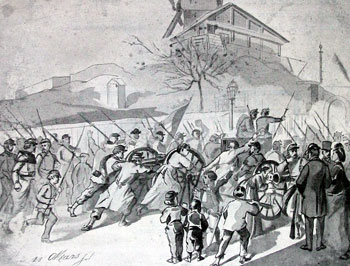
This is a picture of the French national army's attempt to seize
cannons at Montmartre in the early morning of
March 18, 1871. They were not so successful here as they
were at Rue des Rosiers. Dawn had arrived while soldiers
waited for horses to pull the cannons away. A crowd
surrounded the army soldiers. When General Lecomte
ordered them to fire on the unarmed crowd, the
soldiers refused and instead turned their
guns on him, taking him prisoner. Later that day, a
Parisian crowd broke into the prison, pulled Lecomte
out, stood against a wall and publicly executed him.
Picture from: Wikipedia

While the French army was disarmed by the Prussians according to treaty agreements, the National Guard in Paris took control of the situation in the city. The Prussian army declared a victory march on the Champs Elysees--Paris's main street for large public parades. The Paris National Guard was suspicious of Prussian intentions and acted to secure about 400 cannons that had been left behind when the French army earlier evacuated the city. The National Guardsmen took them to working class neighborhoods where they could be easily protected by both Guardsmen and the sympathetic Parisian working-class crowds. The provisional government of France took this action to be a challenge to their authority by the National Guard, mainly because after the January 28 surrender, the National Guard didn't trust the provisional government anymore. The National Guard in Paris had set up its own governing authority independent of the national government; this was called the Central Committee of the National Guard. But it wasn't just the National Guard who were upset with the provisional government for surrendering to the Prussians. The majority of Parisian civilians were as well. Many soldiers in the French army were also angry with their government--so angry that many were on the verge of siding with the rebellious Parisians and National Guard instead of the government.

On March 18, 1871, the national army was tasked with confiscating the 400 cannons from the Paris National Guard. This was essential to breaking the resistance of the Parisians to provisional government authority. Sorry for all the background information, but it all sets the scene of the early morning action of March 18. This quote describes just one instance of the army's attempt to take the cannons on that day. My explanatory brackets are inserted throughout the quote.

"Vassal's [a French army officer] men arrived just before dawn, taking the sentries by surprise. Shots were exchanged. The main body of National Guards at first mistook the police for their own men, the uniforms being similar, and shouted to Vassal to beat the generale (call to arms). Realizing their mistake, they opened fire, wounding a chasseur. A skirmish followed, 120 National Guards being surrounded in their headquarters, a house in the Rue des Rosiers, at the top of the hill, where they soon surrendered. By 5:45 a.m. the summit was firmly in the hands of the government forces. For several minutes shooting continued from the bottom of the hill, but without effect. The operation was quickly under way: the sappers began filling in the trenches surrounding the gun park [trenches had been dug by Guardsmen to prevent the easy removal of the cannons; so the army needed to fill them in to move the cannons away], and the accompanying artillery officer counted the guns and went to fetch the horses waiting in the Champs Elysees and Place de la Concorde. The gendarmes [Parisian police allied with the government] searched the house in the Rue des Rosiers, finding some interesting documents. A number of 'important leaders of the [National Guard] Federation' were arrested. [A total victory by the army, right?! Go, French army! But wait...] From the bottom of the hill, however came the disquieting report of men of the 88th drinking in a bar with National Guards." (44) --Robert Tombs, The War Against Paris 1871

While their comrades were subduing National Guardsmen on the Rue des Rosiers, some French army soldiers chose to sit down at a bar with National Guardsmen who they were supposed to be fighting against at 6 AM on March 18, a Saturday morning!

Monday, June 17, 2013

Gutter Rabbits & Other Parisian Delicacies

"By October [1870, during the Siege of Paris] whatever social stigmas previously inhibited the well-to-do from buying horsemeat were abandoned amid its packaging in the accouterments of haute cuisine. At the commencement of the siege, there were 100,000 horses at Paris; at the end only one-third of that number remained. Towards mid-November, signs began to appear advertising dog and cat butchers, with cats being advertised as 'gutter rabbits.' It has been estimated that over 25,000 cats were eaten during the siege, often boiled and seasoned with pistachios, olives, pimentos, and cornichons. During the second to last week of November, a rat market opened up at the Place de l'Hotel de Ville, with rats selling for 10-15 sous, or one-third to one-half of a National Guardsman's daily salary. The rats were almost assuredly destined for the infamous salami de rat." (49) --David A. Shafer, The Paris Commune
"Cantine municipale pendant le siege de Paris"
by Henri Pille

The Siege of Paris occurred during the Franco-Prussian War that began in 1870. As the Prussian army closed in on and surrounded Paris in September 1870, they cut off all supply lines to the city. Parisians were forced to survive on their existing food and other supplies until the end of January 1871. As you can see, the food situation became very difficult. Their situation became even more pathetic when the extremely cold winter of 1870-1871 began. It was one of the coldest winters of the 19th century in Europe, being more than 2 degrees Celsius colder than average. (Shafer, 50) This meant that fuel for fire to keep warm and cook food was scarce. Lower class Parisians were likely eating either raw or undercooked cats and rats part of the time. Shafer also describes how all the animals in the city zoo were slaughtered in late December because zookeepers could no longer sustain them. The meat was sold to wealthy Parisians.

Tuesday, June 11, 2013

Poles vs. Poles

"[Polish nationalists--who were mostly Polish nobles and exiles] decided that a new Polish nation-state would require a democratic revolution that would involve all social groups, including especially the serfs, and set about planning one. They tried their hand at it in 1846, only their conspiracy went wrong from the start when the Prussian police discovered their plan and arrested the group's leaders. Undaunted, the activists in the Austrian province of Galicia went ahead with the uprising, but their movement against the government was a signal to the serfs to move against them. Noble insurgents were captured by serfs and, spurred on by the rumor that the Austrian authorities were offering rewards for insurgents, living or dead (an official had actually offered payment for information about their whereabouts), peasants turned on and murdered over a thousand nobles, priests, and estate managers. One Habsburg official remembered what happened when peasants came to him with the corpse of a Polish noble estate-owner to get their reward.
"Galician Slaughter" ("Rzez galicyjska") by Jan Lewicki
From: Wikimedia Commons

"We have brought Poles."
"Poles, how could that be," I answered, "what are you?"
"We aren't Poles, we are the emperor's peasants."
"Who are the Poles then?"
"Oh--the Poles! They are the lords, their estate managers, their clerks, the learned men, the well-dressed gentlemen."

The peasants thus denounced the revolutionaries and proclaimed their loyalty to the [Austrian] Emperor and even refused to refer to themselves as 'Polish.' Poles were the feudal landlords. In response to the modern, democratic conception of the nation proposed by the radical insurgents from the nobility, the peasants reasserted the old, medieval concept of the natio: the nation was the nobility, their feudal overlords, and they would have nothing to do with them." --Jonathan Sperber, The European Revolutions, 1848-1851

Friday, June 7, 2013

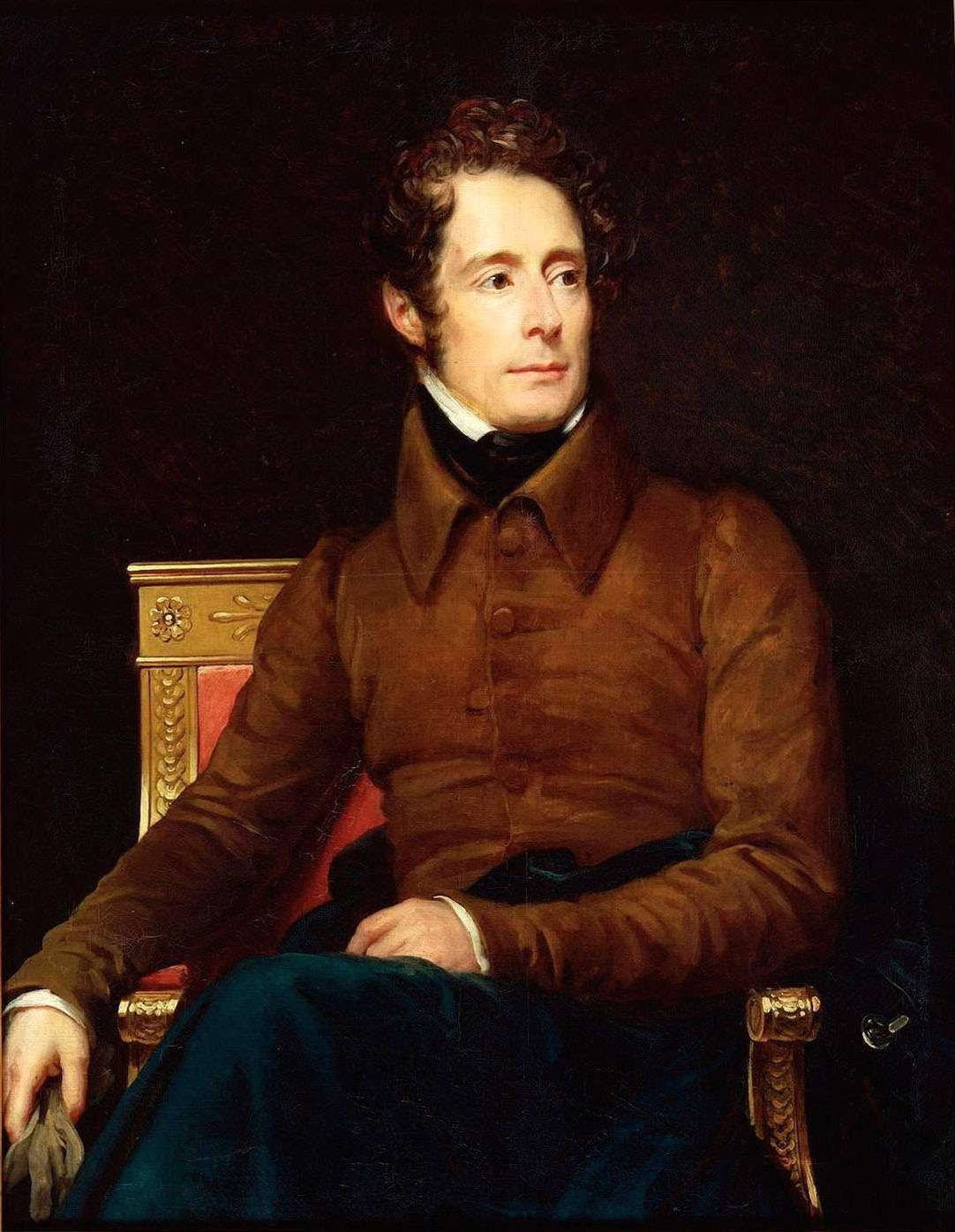
"I am their leader; I must follow them."

"...another version of the 1848 [European] revolutions... views them primarily as farce, a revolution
Alphonse de Lamartine, poet and Minister of
Foreign Affairs in the Second Republic.
made by revolutionaries who were at best incompetent dilettantes, at worst cowards and blowhards who stole away from the scene when the going got rough. This version features the story of the Parisian revolutionary (most versions have him being Alphonse de Lamartine, the poet who was Minister of Foreign Affairs in the provisional government of the French [Second] Republic) observing from his window a demonstrating crowd go by, springing up from his chair, and rushing out, proclaiming, "I am their leader; I must follow them." (1) --Jonathan Sperber, The European Revolutions, 1848-1851

Thursday, June 6, 2013

Writing "Shit" On A Ballot

"In the run-up to the 8 May 1870 plebiscite on the liberal [French Second] Empire (increasingly appearing to be an oxymoron), orators addressed abstention from voting in terms of a strike.
Eugene Varlin, a workingclass activist,
advocated for the political application
of strikes, such as abstention from voting in a
8 May 1870 national plebiscite in France.
From: Eugene Varlin
Revolutionary republicans argued at the clubs that even the act of casting a 'no' vote was tantamount to both a validation of the Empire's legitimacy in fixing the parameters of political debate and cession to the leadership provided by liberal and moderate opponents of the regime. Instead, revolutionary republicans urged their audiences to spoil their ballots with expressions of protest (e.g., 'long live the '93 constitution,' 'long live the social and democratic republic,' or just simply, 'shit') and thereby engage in the equivalent of a strike against the extant political process." (25) --David A. Shafer, The Paris Commune


Wednesday, May 29, 2013

Peasants and Potatoes

"More efficient methods of land use [in 19th century Europe] were accompanied by the rapid development of improved strains of wheat and other traditional crops... Far and away the most important of the new crops, however, was the potato (also originally imported from America), which could be grown on poor soil, was comparatively insensitive to the vicissitudes of weather, and yielded from two to four times as much food as grain crops. Although cultivated throughout Europe, the potato became the staple diet of poorer peasants in the northern and central regions along a broad front from Ireland to Russia, a dependence which was to prove a disaster when the potato crop failed." (2)  --Norman Rich, The Age of Nationalism and Reform, 1850-1890
Potatoes originally came from South America. They were
brought by Spanish explorers to Spain in the mid-16th
century. From there, the crop gradually spread throughout
Europe. 

Having had plenty of exposure to Polish cuisine and its heavy reliance on potatoes, I am curious to discover what Polish and other peasants of northern Europe ate before the arrival of the potato around 1600!

Thursday, April 18, 2013

Slaveholders for Natural Rights

"Consider, for example, the conduct of Richard Henry Lee, the Virginia leader who moved the formal congressional resolution declaring American independence in June 1776. There is no evidence that Virginians had thought it ridiculous for Lee to conduct a public parade in Virginia against the Stamp Act's 'chains of slavery' while literally using his slaves to hold his protest banners." (38)

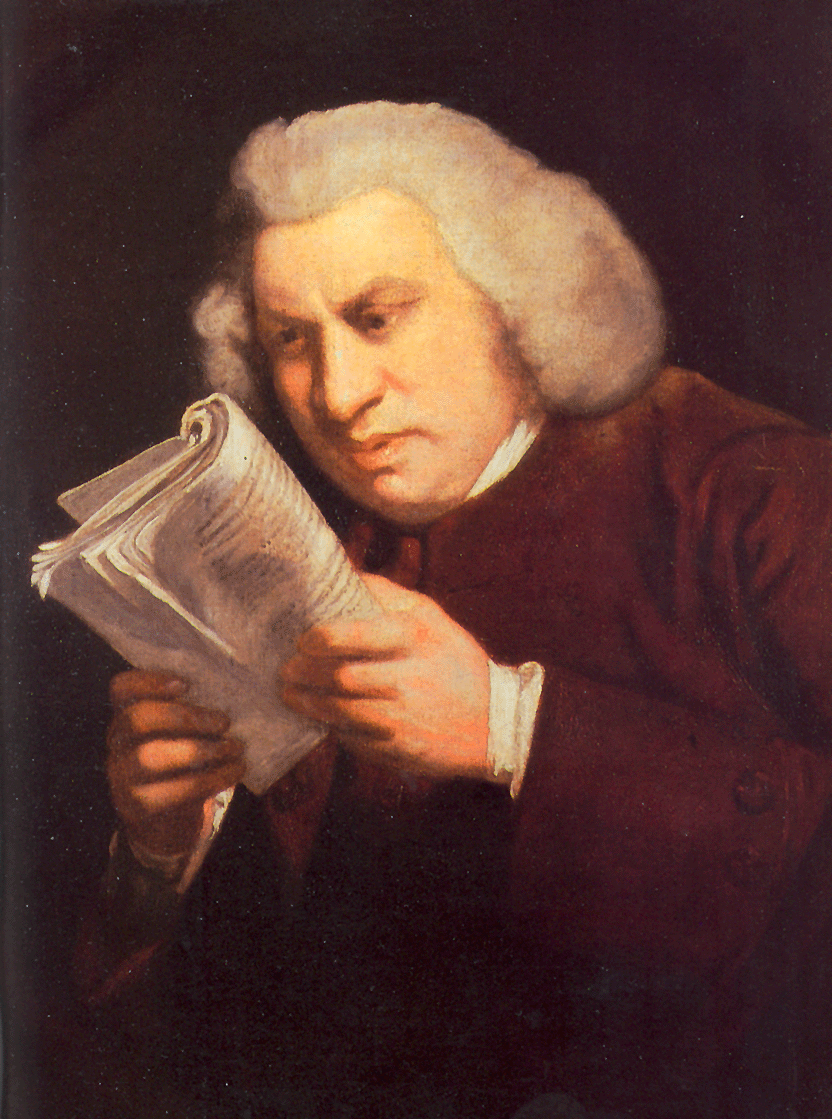
"Anyone familiar with Samuel Johnson's famous gibe--'How is it that we hear the loudest yelps for liberty from the drivers of negroes?'--will appreciate that many Englishmen and contemporary Americans (Northern and Southern) thought that there was tension between American revolutionary principles and the institution of slavery." (42) --both quotes from George William Van Cleve's A SLAVEHOLDERS' UNION
Samuel Johnson
From: Wikipedia

Van Cleve argues that, despite the ideological advances made against the institution of slavery during the Revolutionary War, slavery was ultimately more strongly entrenched following that war than it was before the war. This was due to the political unity of the slave states around a single issue and the substantial (50%) portion of the new nation's overall wealth that was located in the South. The hypocrisy of Americans around slavery and individual liberty was the main reason that Charles Dickens so greatly disliked the United States. By the time he got to the U.S. in 1843, the nation billing itself as a beacon to the world of equality and liberty had been holding slaves for 60 years.