Showing posts with label history. Show all posts

Sunday, April 27, 2014

A Coup D'Etat or a Night With Your Mistress?

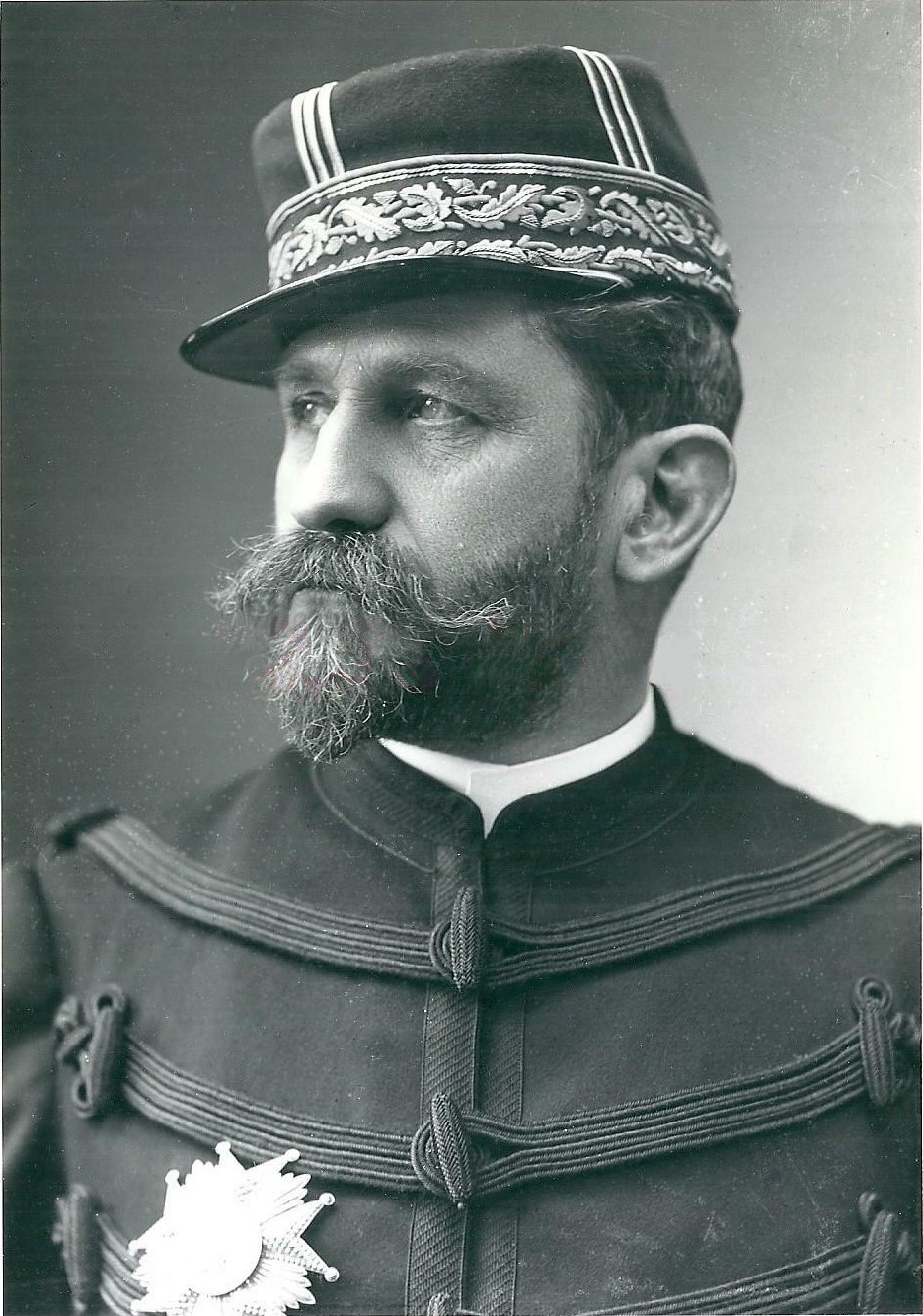
General Georges Boulanger
(From Wikipedia)
"The real basis of [General George Boulanger's] appeal... and the quality that united so many diverse segments of French society in his support, was his embodiment of French hopes for a successful war of revenge against Germany. Here, at last, was the strong man the nation had been seeking, the French answer to [powerful German statesman Otto von] Bismarck. As if to confirm French patriots in their opinion, Bismarck in a speech of January, 1887, named Boulanger as the greatest obstacle to good relations between France and Germany...

In March, 1888, they committed the blunder of dismissing [Boulanger] from the army for engaging illegally in politics while in military service. As a result, Boulanger was no longer a soldier under government orders, and was free to stand for election to the Chamber of Deputies. In the following weeks he entered one by-election after another, as the French electoral system made it possible for him to do, and in each case he was triumphantly elected. The crucial test of Boulanger's popularity came on January 27, 1889, when he stood as a candidate in radical, skeptical Paris. The government threw all its resources in the campaign to defeat him, but again he won a tremendous victory. It was now generally expected that he would seize the opportunity offered by this popular mandate to overthrow the government. Plans for a coup d'etat were made by his supporters; the commanders of the key regiments in Paris waited for his orders. But instead of leading his troops against the government, he spent the night of January 27 with his mistress. Afterward, alarmed by the news of the government's intention to arrest him for treason, he fled abroad." (196-197)  --Norman Rich, The Age of Nationalism and Reform, 1850-1890


Saturday, August 31, 2013

A Community of Atomic Physicists

"Young physicists from all over the world were studying [atomic physics] under Sommerfeld in Munich [in the early 1920s]. They even took their problems with them into the cafes.
This is a present-day cafe scene in the Hofgarten area of
Munich. (From Flickr: Maria Mia)
Marble-topped tables were covered with scribbled mathematical formulae. The waiters of the Cafe Lutz in the Hofgarten, regularly frequented by the Munich physicists, had strict instructions never to wipe the tables without special permission. For if a problem had not been solved by the time the cafe closed for the night, the further necessary calculations were carried out the following evening. It happened fairly often, moreover, that some unknown person would have the audacity to jot down the solution during the interval. Some young physicist would have been to too impatient to wait until the next meeting." (9) --Robert Jungk, Brighter Than a Thousand Suns: A Personal History of the Atomic Scientists

Saturday, April 6, 2013

Eating a Writ 1780s-Style

"In September 1784 a deputy sheriff tried to hand Hezekiah Maham of South Carolina a writ ordering him to appear in court to answer his creditor's charges. Maham did not simply refuse the writ: he made the deputy eat it, graciously supplying him a beverage to wash it down." --Woody Holton in UNRULY  AMERICANS AND THE ORIGINS OF THE CONSTITUTION

Friday, April 5, 2013

Paper Money, or Jesus Christ

"In what was possibly the most audacious attempt to use the Bible to justify relief legislation, an essay appearing in Massachusetts in September 1786 compared paper money to Jesus Christ.  The author permitted paper currency to speak in its own defense, reminding Americans that it had sacrificed its life for them. Even as its own value melted away, the currency recalled, it had funded the war that secured American independence. Paper money then prophesied that, like Jesus Christ, it would soon return. 'I died for their deliverance from foreign foes,' it declared, 'and will rise again to deliver them from their domestick ones." --Woody Holton in UNRULY AMERICANS AND THE ORIGINS OF THE CONSTITUTION

UNRULY AMERICANS
AND THE ORIGINS OF
THE CONSTITUTION
by Woody Holton

A little context: following the end of the Revolutionary War in the 1780s, Americans were forced to pay high taxes so that Congress and the states could pay interest to government bondholders. These bonds were issued by the federal and state governments during the war when public funds were running short. For example, bonds were often issued as payment to Continental Army soldiers. Because of the financial hardship experienced by many Americans during the recession of the 1780s, many of the bonds found their way into the hands of wealthy investors. Unfortunately, many state taxes had to be paid in specie (gold or silver), which was scarce.

There was also a shortage of paper money. Many Americans advocated for the printing of paper money by state assemblies so that taxes would be easier to pay. But legislators were skeptical of this solution. The problem was that paper money had a poor recent history of depreciating in value very quickly. The Continental Congress had issued so much paper money during the war that by 1780, it was almost worthless. It must be conceded that, even though Congress was almost broke by the end of the war, issuing paper money played a major role in enabling them to pay for it. In a way, Congress issuing paper money (i.e. Continentals) was crucial to winning the war.

Paper money's poor history of value stability made wealthy bondholders skeptical of taxes being paid with it--they didn't want worthless paper money for their bond interest income--they wanted stable-valued gold or silver. But paper money would have made it much easier for Americans to pay the high taxes. Property, especially land, was extremely illiquid. If you were a farmer who had to pay a tax of 10% of your property value, but were not able to pull together this sum by selling livestock, produce, or other assets, then you might have to sell your land (often at a fraction of its real value because no one else had money either) just to pay the tax. Paper money made exchanges of goods, such as livestock or produce, much easier. Therefore, raising a tax sum was more easily done with paper money in circulation. Holton describes how farmers and other "ordinary" Americans pressed their state assemblies to issue paper money. Thus, in reading Holton's book, you come to the above bizarre comparison of paper money to Jesus Christ!