Showing posts with label France. Show all posts

Monday, February 16, 2015

I Am Lovesick, Now Please Pass the Opium

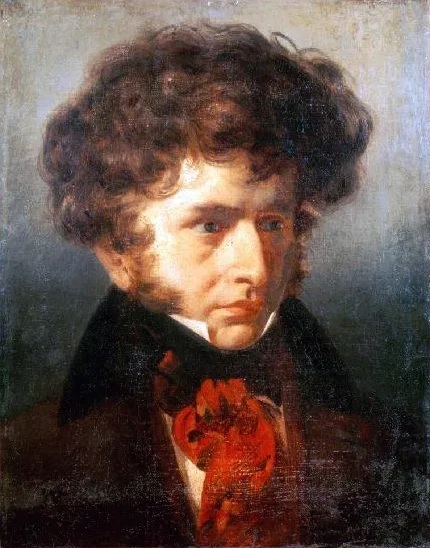
Hector Berlioz (From: Wikipedia)
"When he was twenty-three, [Hector] Berlioz was overwhelmed by the works of Shakespeare and also fell madly in love with a Shakespearean actress, Harriet Smithson, to whom he wrote such wild, impassioned letters that she considered him a lunatic and refused to see him. To depict his 'endless and unquenchable passion,' Berlioz wrote the Symphonie fantastique (Fantastic Symphony) in 1830, which startled Parisians by its sensationally autobiographical program, its amazingly novel orchestration, and its vivid depiction of the weird and diabolical.

In 1830, too, Berlioz won the Prix de Rome (the Rome Prize), subsidizing two years' study in Rome; when he returned to Paris, he finally met and married Harriet Smithson--after she had attended a performance of the Fantastic Symphony and realized that it depicted her. (They separated, however, after only a few years.)" (241-242)

So, what exactly was in the Fantastic Symphony that won Berlioz the girl of his dreams? Here are some quotes from the program notes he wrote for his audience:

"A young musician of extraordinary sensibility and abundant imagination, in the depths of despair because of hopeless love, has poisoned himself with opium. The drug is too feeble to kill him but plunges him into a heavy sleep accompanied by weird visions. His sensations, emotions, and memories, as they pass through his affected mind, are transformed into musical images and ideas. The beloved one herself becomes to him a melody, a recurrent theme (idee fixee) which haunts him continually...

Harriet Smithson (From: Wikimedia)
[Notes for the Fourth Movement, March to the Scaffold] He dreams that he has murdered his beloved, that he was been condemned to death and is being led to the scaffold. The procession moves forward to the sounds of a march that is now somber and fierce, now brilliant and solemn, in which the muffled sounds of heavy steps give way without transition to the noisiest outbursts. At the end the idee fixee returns for a moment, like a last thought of love interrupted by the death blow...

[Notes for the Fifth Movement, Dream of a Witches' Sabbath] He sees himself at a witches' sabbath in the midst of a hideous crowd of ghouls, sorcerers, and monsters of every description, united for his funeral. Strange noises, groans, shrieks of laughter, distant cries, which other cries seems to answer. The melody of the loved one is heard, but it has lost its character of nobleness and timidity; it is no more than a dance tune, ignoble, trivial, and grotesque. It is she who comes to the sabbath!... A howl of joy greets her arrival... She participates in the diabolical orgy... The funeral knell, burlesque of the Dies irae. Witches' dance. The dance and the Dies irae combined." (243-246) --Roger Kamien, Music: An Appreciation

I hope all you lovesick young men are out there reading! If you really want the girl, write in a song in which you imagine murdering her and, after your trial and execution, discovering that she is a witch! Now that's a prescription for love. Hey, it worked for Berlioz.


Sunday, April 27, 2014

A Coup D'Etat or a Night With Your Mistress?

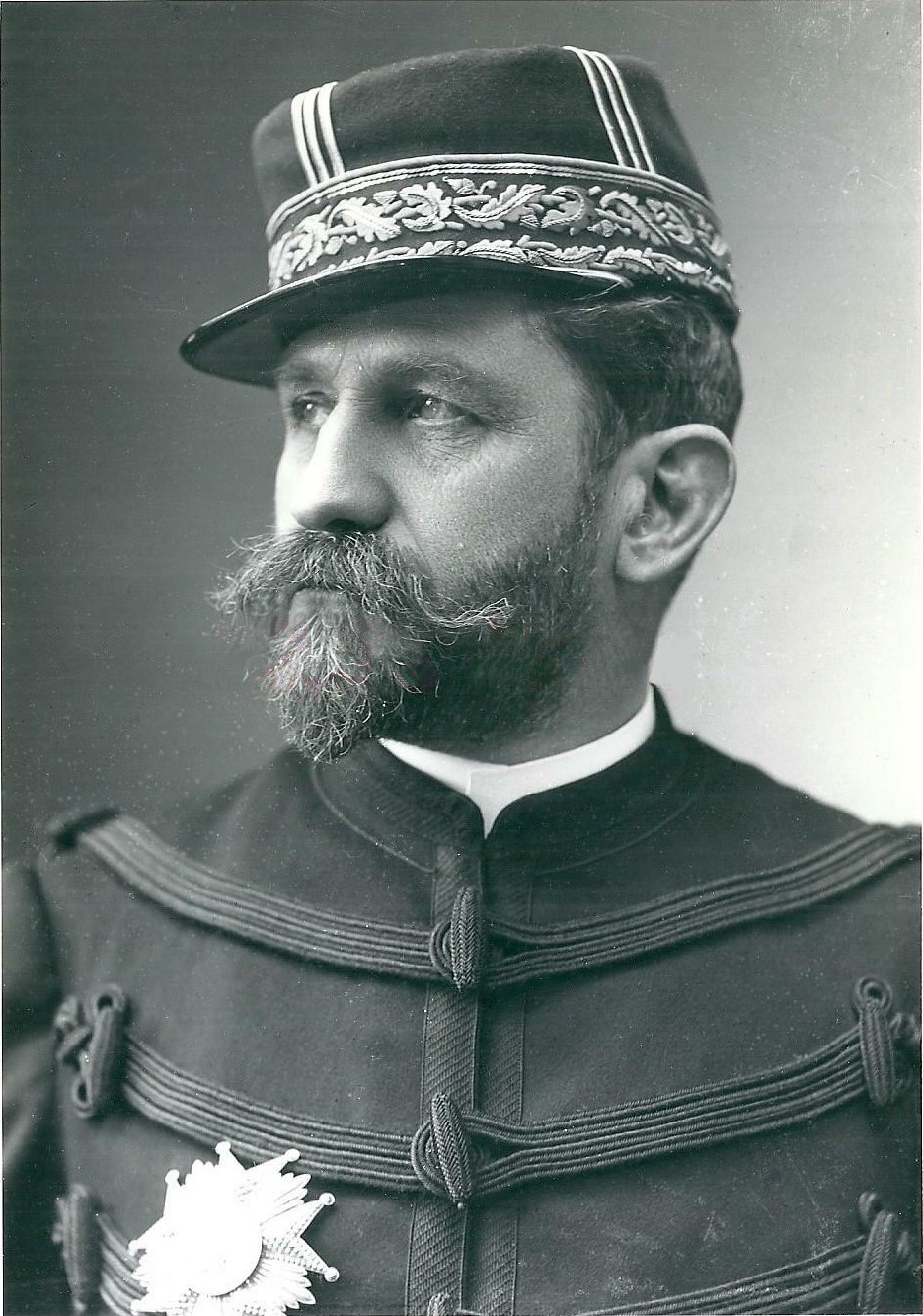
General Georges Boulanger
(From Wikipedia)
"The real basis of [General George Boulanger's] appeal... and the quality that united so many diverse segments of French society in his support, was his embodiment of French hopes for a successful war of revenge against Germany. Here, at last, was the strong man the nation had been seeking, the French answer to [powerful German statesman Otto von] Bismarck. As if to confirm French patriots in their opinion, Bismarck in a speech of January, 1887, named Boulanger as the greatest obstacle to good relations between France and Germany...

In March, 1888, they committed the blunder of dismissing [Boulanger] from the army for engaging illegally in politics while in military service. As a result, Boulanger was no longer a soldier under government orders, and was free to stand for election to the Chamber of Deputies. In the following weeks he entered one by-election after another, as the French electoral system made it possible for him to do, and in each case he was triumphantly elected. The crucial test of Boulanger's popularity came on January 27, 1889, when he stood as a candidate in radical, skeptical Paris. The government threw all its resources in the campaign to defeat him, but again he won a tremendous victory. It was now generally expected that he would seize the opportunity offered by this popular mandate to overthrow the government. Plans for a coup d'etat were made by his supporters; the commanders of the key regiments in Paris waited for his orders. But instead of leading his troops against the government, he spent the night of January 27 with his mistress. Afterward, alarmed by the news of the government's intention to arrest him for treason, he fled abroad." (196-197)  --Norman Rich, The Age of Nationalism and Reform, 1850-1890


Wednesday, July 3, 2013

No Flag, No King

The tricolor flag of France since 1793.
From: WorldAtlas.com
In August 1873, French monarchists were shopping for a new king. The Third French Republic (i.e., no king) had been proclaimed in September 1870 following the capture of Emperor Louis Napoleon (Napoleon III) by Prussians during the Franco-Prussian War. But by 1873, monarchists in the National Assembly had garnered sufficient power to end the Republic by naming a new king. Their choice? Henry, count of Chambord, from the royal Bourbon family. I'll let historian Norman Rich take the story from here.
Henry, Count of Chambord, of the
French royal Bourbon family.
From: Wikimedia

"As he was without heirs, he was to be succeeded by the Orleanist, the count of Paris (1838-1894). It was a sensible arrangement, but the count of Chambord was not a sensible man. He insisted on the restoration of the white fleur-de-lis flag of the Bourbons as the emblem of France in place of the tricolor, which had been the national flag since the revolution. 'Henry V cannot abandon the flag of Henry IV,' said the high-minded candidate, referring to his ancestor who had changed his religion three times in the process of becoming king. The flag issue proved to be insurmountable. The French national would not give up the banner that had flown at Austerlitz and Jena, at Sevastopol and Solferino. Even the loyal [Marshal] MacMahon admitted that if the white flag of the Bourbons were run up, the chassepots would go off of their own accord. In November, 1873, the monarchists in the assembly voted to give MacMahon the 'executive power' in France for seven years, in the hope that by that time the count of Chambord would be dead and the candidate succeeding him would be more reasonable." (189-190) --Norman Rich, The Age of Nationalism and Reform, 1850-1890

He turned down the offer to be king because of a damn flag!

Flag of the Bourbon family. 

Friday, June 7, 2013

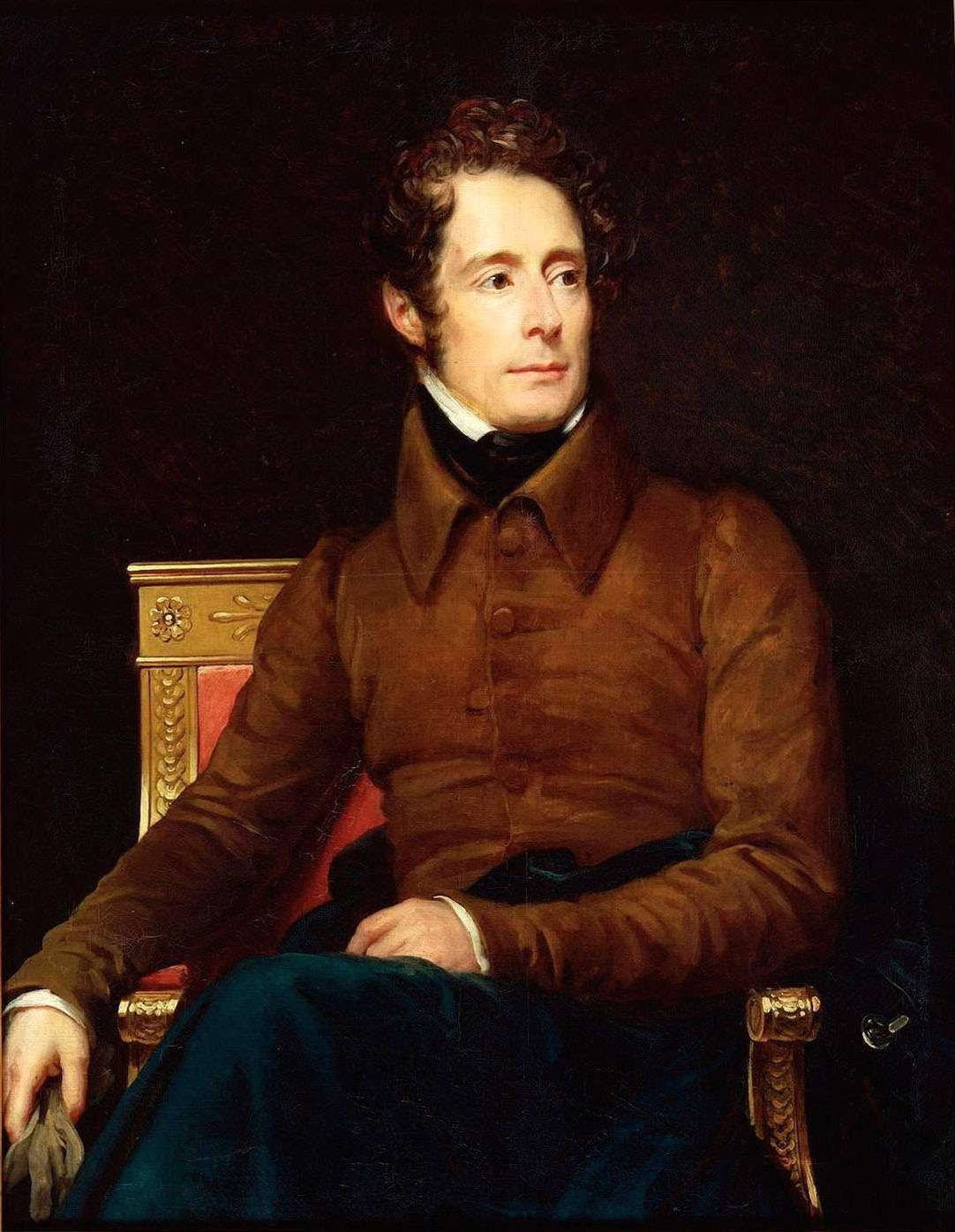
"I am their leader; I must follow them."

"...another version of the 1848 [European] revolutions... views them primarily as farce, a revolution
Alphonse de Lamartine, poet and Minister of
Foreign Affairs in the Second Republic.
made by revolutionaries who were at best incompetent dilettantes, at worst cowards and blowhards who stole away from the scene when the going got rough. This version features the story of the Parisian revolutionary (most versions have him being Alphonse de Lamartine, the poet who was Minister of Foreign Affairs in the provisional government of the French [Second] Republic) observing from his window a demonstrating crowd go by, springing up from his chair, and rushing out, proclaiming, "I am their leader; I must follow them." (1) --Jonathan Sperber, The European Revolutions, 1848-1851

Thursday, June 6, 2013

Writing "Shit" On A Ballot

"In the run-up to the 8 May 1870 plebiscite on the liberal [French Second] Empire (increasingly appearing to be an oxymoron), orators addressed abstention from voting in terms of a strike.
Eugene Varlin, a workingclass activist,
advocated for the political application
of strikes, such as abstention from voting in a
8 May 1870 national plebiscite in France.
From: Eugene Varlin
Revolutionary republicans argued at the clubs that even the act of casting a 'no' vote was tantamount to both a validation of the Empire's legitimacy in fixing the parameters of political debate and cession to the leadership provided by liberal and moderate opponents of the regime. Instead, revolutionary republicans urged their audiences to spoil their ballots with expressions of protest (e.g., 'long live the '93 constitution,' 'long live the social and democratic republic,' or just simply, 'shit') and thereby engage in the equivalent of a strike against the extant political process." (25) --David A. Shafer, The Paris Commune