 |
| Citizens protesting and entering the Stasi building in Berlin; the sign accuses the Stasi and SED of being Nazistic dictators. (From: Wikipedia) |
Friday, May 2, 2014
Shred, Shred, Shred

Sunday, April 27, 2014
A Coup D'Etat or a Night With Your Mistress?
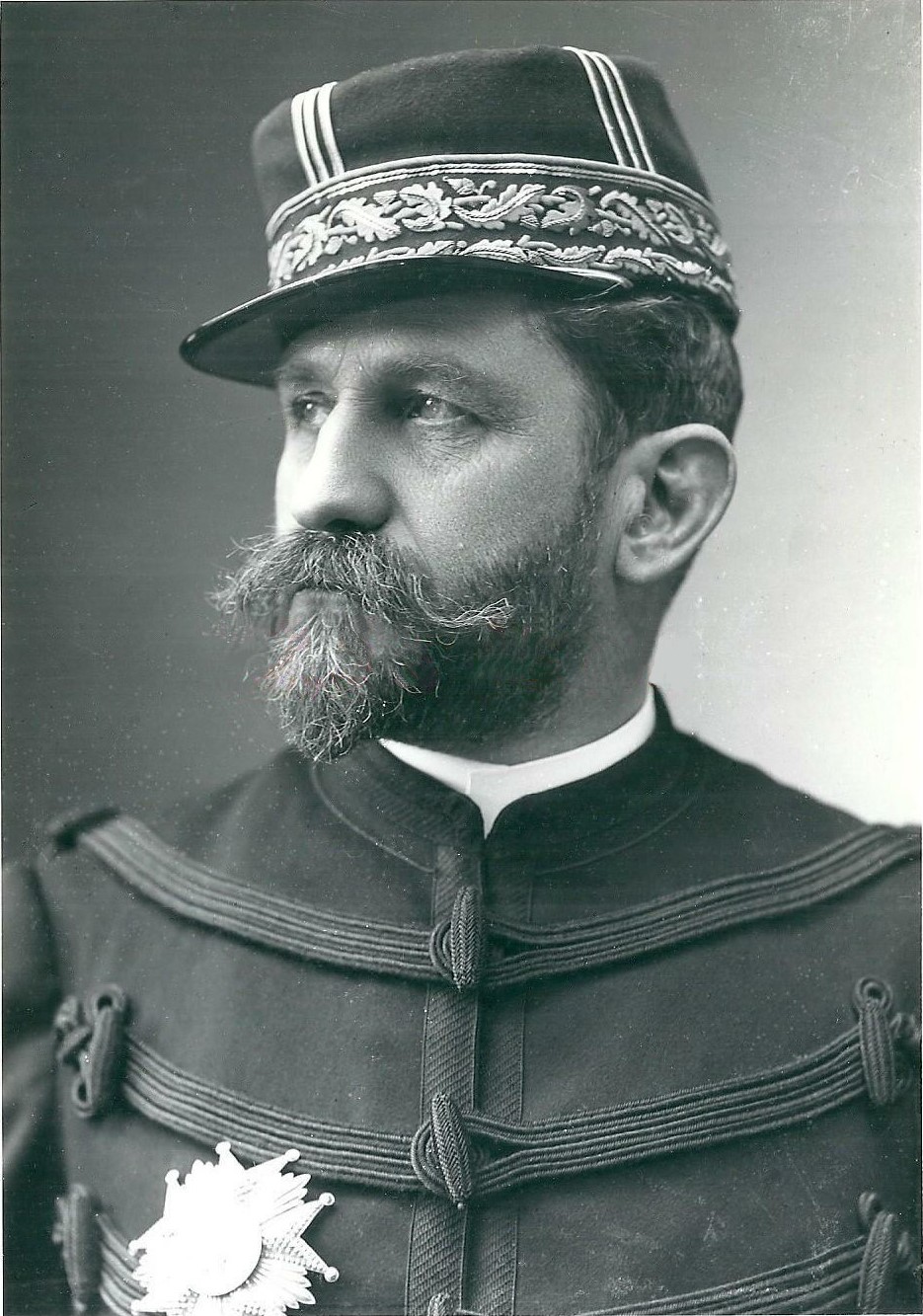 |
| General Georges Boulanger (From Wikipedia) |
In March, 1888, they committed the blunder of dismissing [Boulanger] from the army for engaging illegally in politics while in military service. As a result, Boulanger was no longer a soldier under government orders, and was free to stand for election to the Chamber of Deputies. In the following weeks he entered one by-election after another, as the French electoral system made it possible for him to do, and in each case he was triumphantly elected. The crucial test of Boulanger's popularity came on January 27, 1889, when he stood as a candidate in radical, skeptical Paris. The government threw all its resources in the campaign to defeat him, but again he won a tremendous victory. It was now generally expected that he would seize the opportunity offered by this popular mandate to overthrow the government. Plans for a coup d'etat were made by his supporters; the commanders of the key regiments in Paris waited for his orders. But instead of leading his troops against the government, he spent the night of January 27 with his mistress. Afterward, alarmed by the news of the government's intention to arrest him for treason, he fled abroad." (196-197) --Norman Rich, The Age of Nationalism and Reform, 1850-1890
Wednesday, February 19, 2014
Archivist: "And in this box, we have radioactive uranium."
 |
| Chicago Pile One Scientists; Enrico Fermi is the first man in the front row. Albert Wattenberg is the third man in the front row. (From the Atomic Archive) |
Wattenberg had literally put his fingers on a half-century of carelessness in preserving the beginnings of the nation's nuclear history. Thousands of artifacts contaminated by radionuclides during the testing and production of nuclear materials--laboratory notebooks, classified documents, components from experiments, and the like--were being stored along with nonradioactive material in files open to public inspection. Although the health hazards associated with these materials are small... the contamination is presenting the Department of Energy and the National Archives with a major cleanup problem." --Science, January 14, 1994, quoted on p121 in Gregory S. Hunter, Developing and Maintaining Practical Archives
The archivist who processed that box must have been using a "More Product, Less Process" (MPLP) approach! "Hmmm... that's just a box of uranium pile artifacts. They certainly don't need item-level analysis. Next box, please!"
Friday, February 7, 2014
One-Fifth of a Five Sentence Five-Year Plan (Submitted Annually)
 |
| Seymour Cray (From: Wikipedia) |
Seymour Cray was the creator of the first supercomputer. He was clearly a man to be respected by his peers at the Control Data Corporation. Just as clearly, he was a man who knew his true position in the world. One can clearly picture him, sitting at his desk, signing off on yet another one-sentence plan and forwarding it to his superiors at Control Data as he chuckles under his breath, "I wrote a one-sentence 0.2 year plan because I can write a one-sentence 0.2 year plan!" And we can envision Control Data's executives meeting to discuss what to do about that mischievous Seymour Cray. And the records managers cursing Seymour Cray because he just didn't conform to their perfect five-year plan categories. But what could they do? The man invented the supercomputer. I suppose they just had to let Seymour be Seymour.
Tuesday, February 4, 2014
Nixon:"Just destroy all the tapes."
 |
| Richard Nixon (From: Wikipedia) |
Monday, February 3, 2014
Lawrence the Librarian
 |
| Tintoretto's "The Martyrdom of Saint Lawrence" (From: Wikipedia) |
--Gregory S. Hunter, Developing and Maintaining Practical Archives
Saturday, December 7, 2013
Our Hero, the Archivist
 |
| Indiana Jones From: Wikipedia |
Who knew there was and is a popular cultural trend in which the work of an archivist is glamourized?!? I am skeptical of Senf's claims here because I am not yet certain that a majority of the public could describe what the work of an archivist is, let alone think romantically about it. The running joke among archivists and archivists-in-training is that the the word "archivist" is often confused by the public with other words such as "activist" and "anarchist." This all of course illustrates the necessity for public outreach by archivists as well as their involvement in high school and college research classes and projects.
*The full reference on Buxton's article mentioned above:
Buxton, J. (2003) Casaubon revamped: contemporary adventures in the archive, Contemporary Literature, 44(2), 345-352.
Subscribe to:
Posts (Atom)